Guides
Retool current_user.groups Is Empty: Causes & Fixes
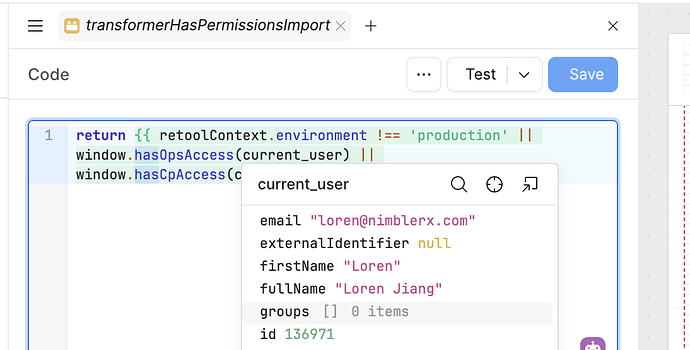
If you've opened Retool at 11pm to find your admin portal or customer-facing app completely broken, and traced it back to current_user.groups returning an empty array, you've hit one of the most disruptive bugs Retool users encounter. The retool current_user.groups empty issue has affected teams on the Business plan and beyond, silently wiping group membership data from the current_user object even when groups are clearly visible in the Retool settings dashboard. This post explains what causes it, how to diagnose it, and exactly what to do while you wait for a platform-level fix.
What Is current_user.groups and Why Does It Matter?
In Retool, the current_user object is a built-in global variable that exposes metadata about the logged-in user — including their email, name, and group memberships. The current_user.groups property returns an array of group names (e.g., ["admin", "billing", "support"]) that you can use to conditionally show or hide UI components, gate access to queries, and control navigation between pages.
Many teams build their entire permission architecture on top of this object. A component's Hidden property might read !current_user.groups.includes("admin"), or a query might only run if current_user.groups.includes("finance"). When groups suddenly returns [], every one of those checks fails simultaneously — effectively locking all users out of role-restricted features, or worse, exposing everything to everyone.
Why Does current_user.groups Return an Empty Array?
Based on reports from the Retool community, this issue is not caused by a misconfiguration in your app. The root cause is a platform-side regression — typically introduced during a Retool cloud deployment or update — that breaks how group membership is passed into the current_user object at session initialization.
Key signals that confirm you're hitting this bug rather than a local misconfiguration:
- Groups are correctly assigned and visible under Settings → Users in your Retool org.
- The issue appeared suddenly without any changes on your end.
- Multiple users across your org are affected at the same time.
- Related symptoms may appear, such as resource query blocks failing with access errors even for admin users.
- Running full queries works, but testing individual blocks or components that rely on
current_user.groupsfails.
This is a Retool cloud incident, not an app bug. That distinction matters for how you respond.
Immediate Steps to Take When current_user.groups Is Empty
You won't be able to fix the underlying cause yourself — but you can minimize damage and speed up resolution. Here's what to do right now:
- Verify group assignments are intact. Navigate to
https://your-org.retool.com/settings/usersand confirm that your users still have their group memberships. If they do, the data exists — it's just not being passed tocurrent_user. - Check Retool's status page. Visit status.retool.com to see if an active incident has been declared. If not, your report may help surface it faster.
- File a support ticket immediately. Include your org URL, the affected app URLs, a screenshot of a working group assignment in Settings, and a screenshot or console log showing
current_user.groupsreturning[]. The more orgs reporting the same issue, the faster Retool triages it. - Post in the Retool community forum. Other teams hitting the same regression will be searching for confirmation. Your post helps Retool's team identify blast radius and prioritize a rollback.
- Implement a temporary fallback if possible. If your app architecture allows it, consider temporarily removing group-based visibility rules from the most critical components so users aren't fully locked out while the fix is deployed.
How to Harden Your Retool Apps Against This in the Future
Once the incident is resolved, it's worth building some resilience into your permission logic so a single empty groups array doesn't take everything offline at once.
- Use default-open rather than default-closed for low-risk components. Instead of hiding a component unless a group is present, show it unless a restricting group is explicitly absent. This prevents total lockouts for non-sensitive features.
- Add a fallback check. Wrap group checks with a length guard:
current_user.groups.length > 0 && current_user.groups.includes("admin"). This won't fix a bug, but it makes the failure mode more visible. - Log current_user on app load. Add a lightweight query or JS transformer that logs
current_useron app initialization. This gives you an instant diagnostic signal when something changes. - Use Retool's environment variables or a config table for critical access rules. Storing permission logic in a database table means you can patch access rules without redeploying apps during an incident.
- Monitor your apps with synthetic checks. A simple external ping that logs in as a test user and verifies
current_user.groupsis non-empty can alert you to this class of regression before your real users hit it.
What Retool Says About This Issue
Retool's support team has acknowledged this type of regression in community threads, noting they actively investigate reports and work toward rollbacks when platform-level issues are confirmed. The fastest path to resolution is always a combination of direct support tickets and community posts — both generate the internal signal Retool needs to escalate an incident.
If you're a self-hosted Retool customer, this class of bug is less likely to affect you mid-session, since you control your own deployment cadence. Cloud customers are more exposed to sudden regressions from platform updates pushed without notice.
Summary
When current_user.groups is empty in Retool despite groups being correctly configured in Settings, the cause is almost always a platform-side regression rather than anything wrong with your app. Verify your group data is intact, file a support ticket with evidence, post in the community to help surface the incident, and implement temporary fallbacks to reduce user impact. Long-term, build your permission logic with resilience in mind so that a single empty array can't cascade into a full outage.
Ready to build?
We scope, design, and ship your Retool app — fast.